
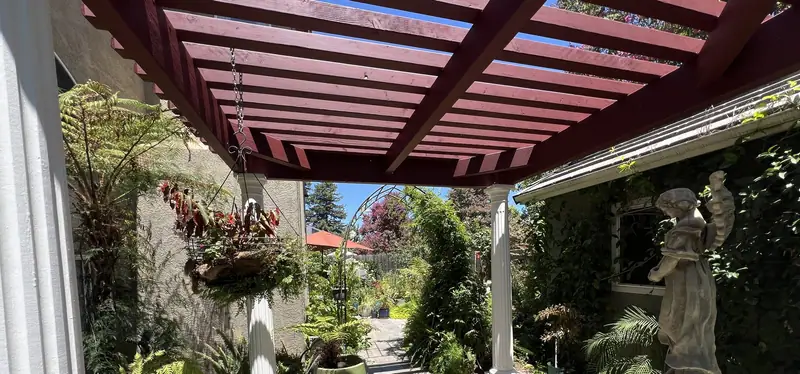
A pergola is one of those backyard features you stop noticing until something looks wrong: a column that leans a little, paint that keeps peeling at the bottom, or a beam that sags at one end. This summer our crew repaired a two-tone backyard trellis for a homeowner in Ripon, in San Joaquin County. From a few steps back it looked mostly fine. Up close, the wood holding it up was rotting from the ground up. Here's how the job went, what we found once we opened things up, and what to watch for on your own pergola.
What Was Going Wrong
This pergola has a classic look: white fluted columns holding up a deep red trellis of beams and rafters over a stone patio and garden walkway. The columns are decorative covers. Inside each one is a structural wood post, set on a metal base at the patio. That's a common way to build them, and it looks great, but it hides the part most likely to fail.
When we lifted the first column covers, the problem was obvious. The bottoms of the hollow columns were packed with rotted wood that had broken down to something closer to soil.
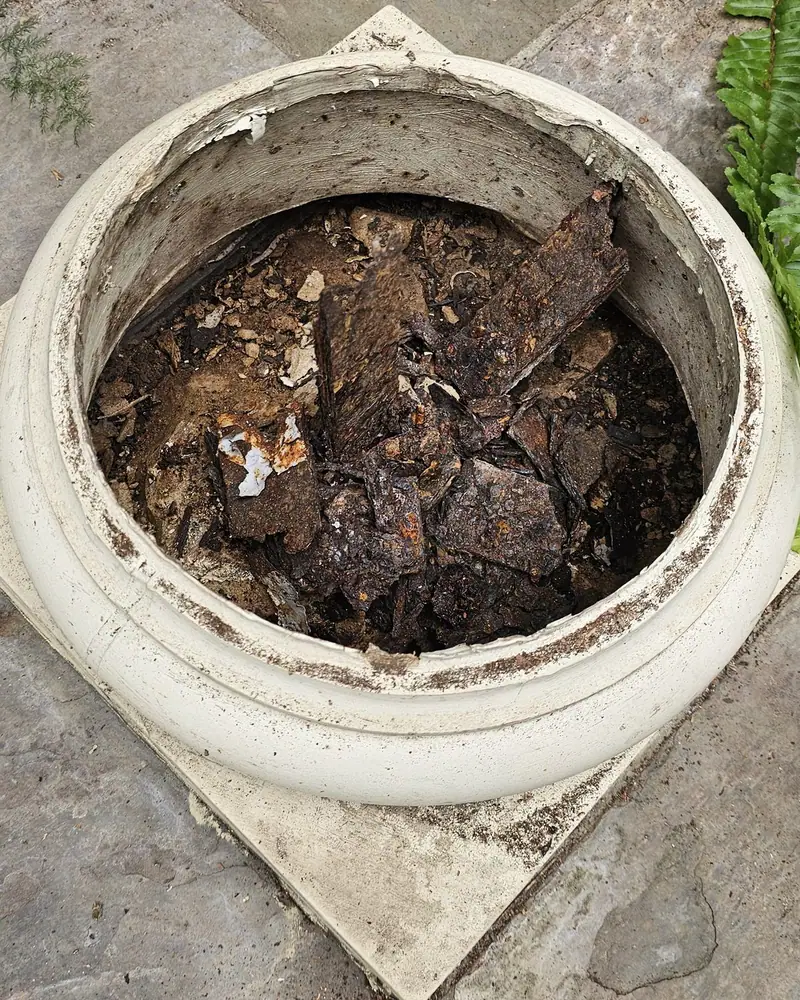
Water gets inside a hollow column from rain and garden watering, and then it has nowhere to go. The post sits in a damp, dark pocket year after year. Here in the Central Valley, long hot summers dry the outside of the wood while the inside stays wet, and rot can spread a long way before anything shows on the surface.
Taking It Apart Carefully
The goal on this job was to save as much of the original pergola as we could. The estimate called for taking the trellis and posts down, repairing them, and putting the existing beams back up, replacing only the beams that were failing. The existing posts and post bases were joined back together and the original column covers went back on, so the finished pergola keeps its look.
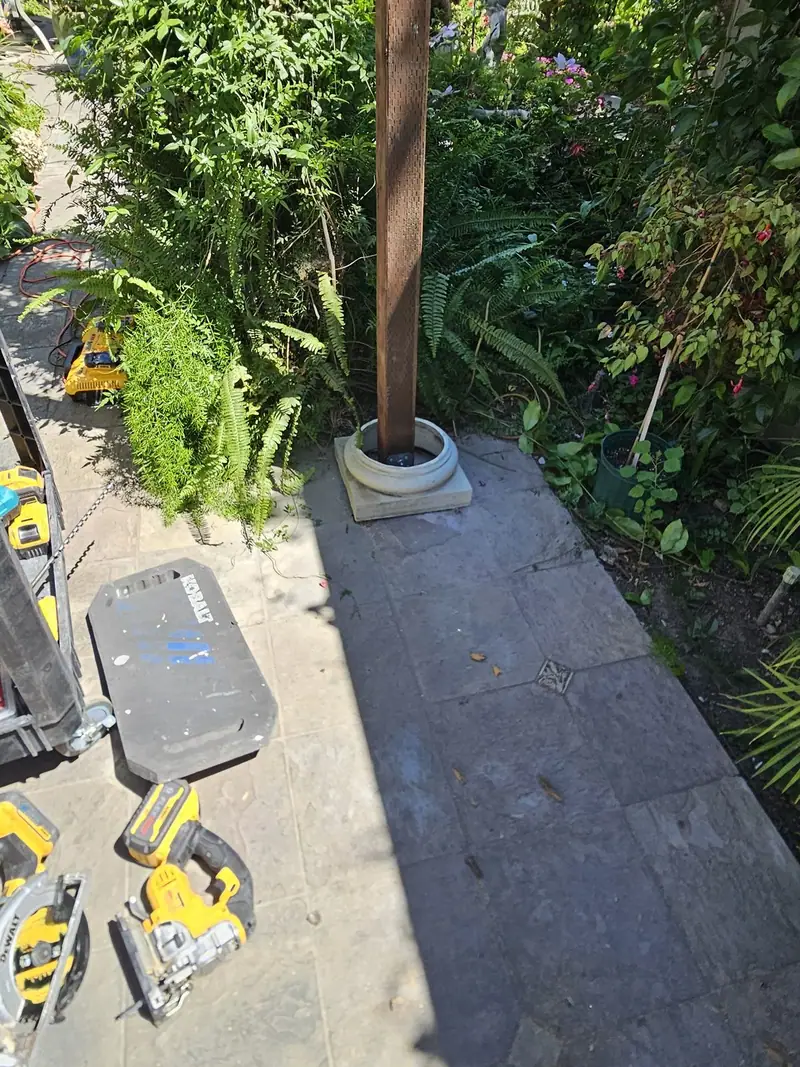
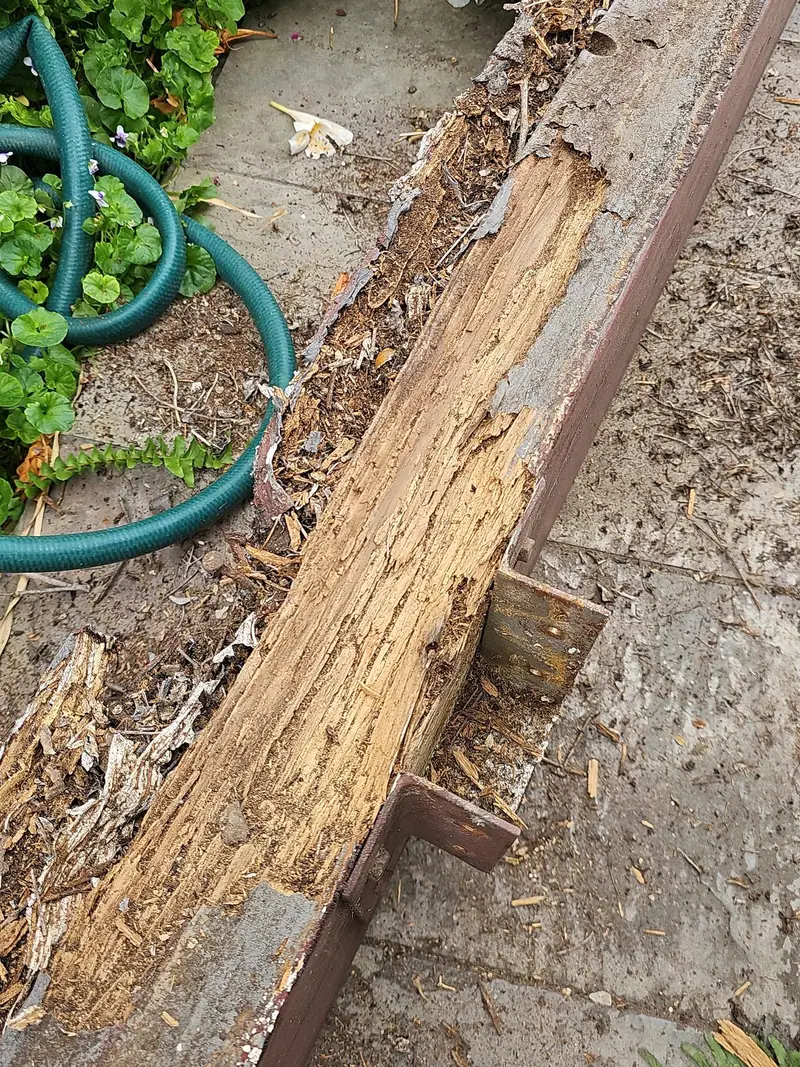
With the covers off, we could see each post and its connection to the patio. That's where most of the damage was. One of the beams that came down had rotted through its core, leaving a hollow shell of wood inside its metal bracket.
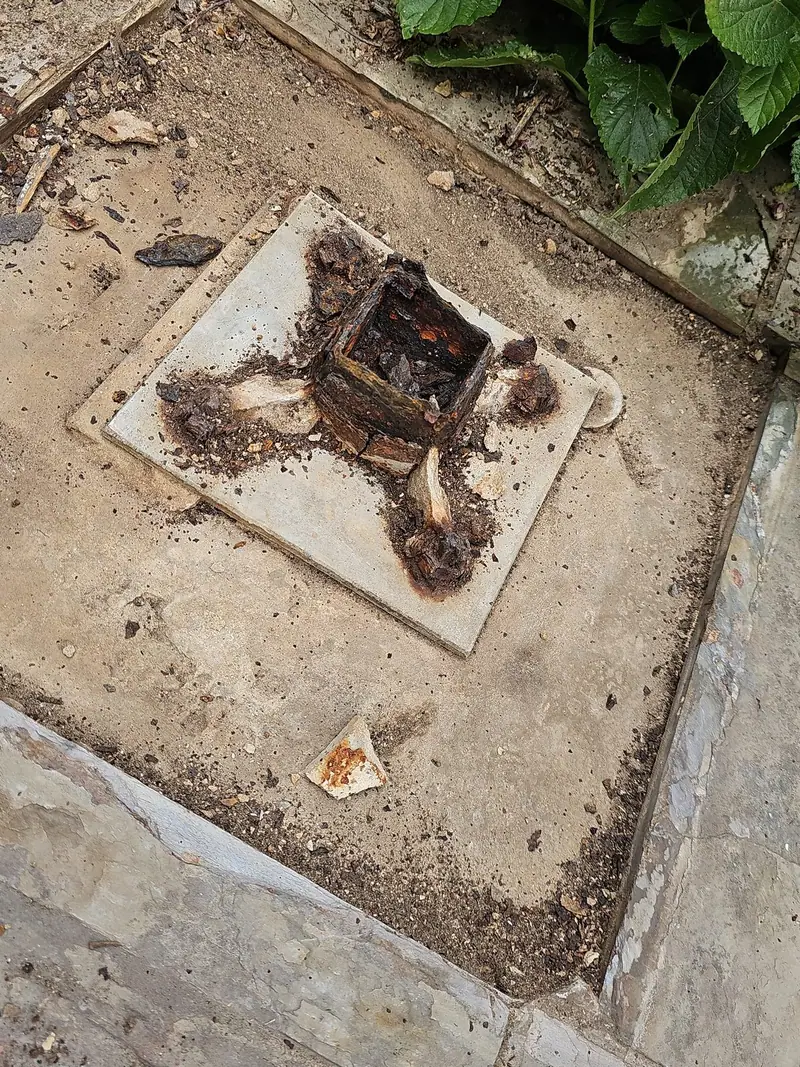
Some of the metal post bases were in rough shape too. Constant moisture had rusted the steel and broken down the wood around it, which is exactly the kind of damage you can't see with the column covers on.
Putting It Back Together
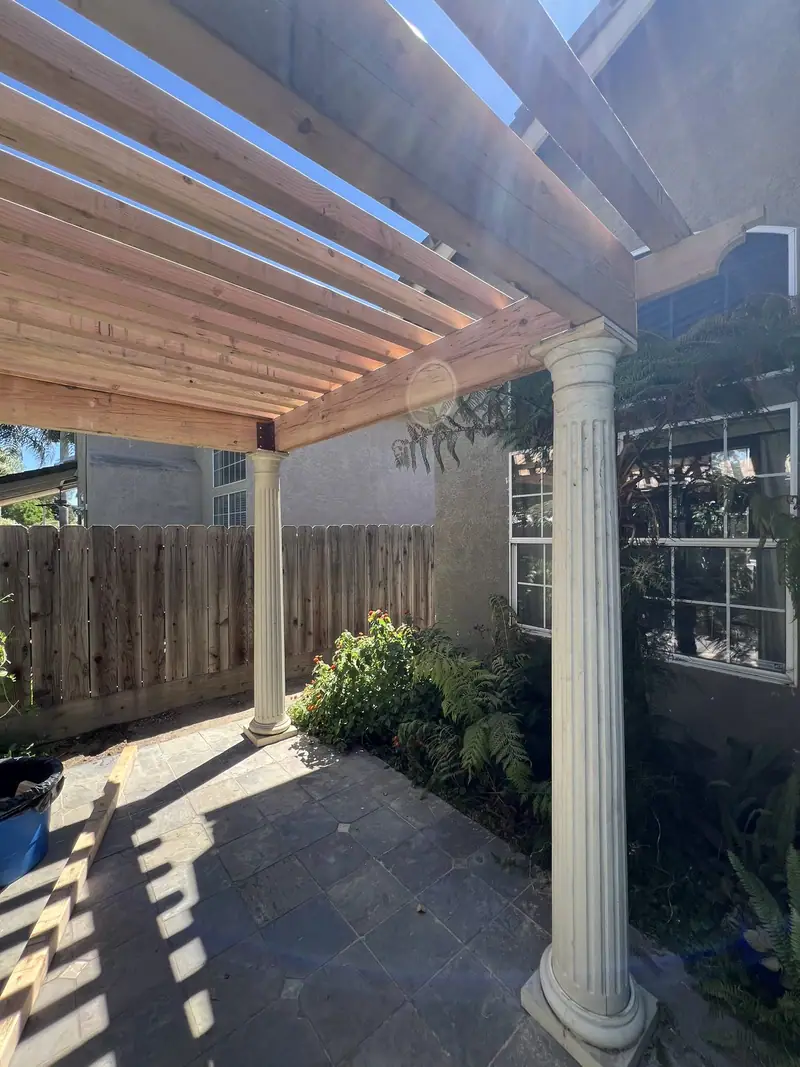
Once the rotted wood was cleaned out, the crew rebuilt the structure. Beams that were still sound went back up. Where a beam was failing, new lumber took its place. In the photos from late July you can see the fresh, unpainted boards right next to the original red ones, with the white columns back in place underneath.
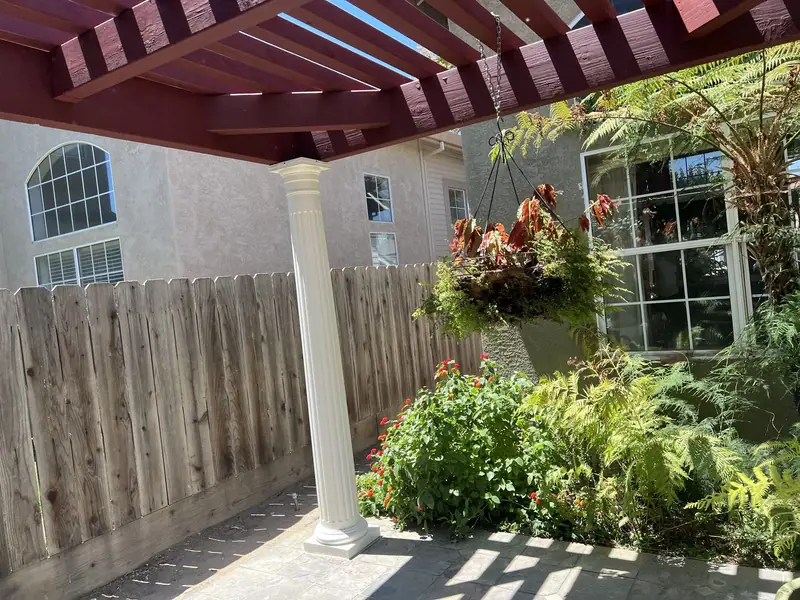
The last step was repainting the whole trellis in the same two colors it had before. Paint matters on a pergola for more than looks. A good, complete coat is the wood's first defense against sun and water, and painting the whole structure at once means the new boards and the old ones wear the same way from here on.
Repair or Replace?
Not every tired pergola needs to be torn out. On this job the design was worth keeping and most of the beams were still sound, so a repair made more sense than starting over. Here's how we usually think about it:
- Repair makes sense when the damage is limited to post bottoms, connections, or a few beams, and the rest of the wood is solid.
- Replace is usually the better call when rot has spread through most of the posts and beams, or when you want a different size, shape, or material anyway.
- Refinish only works when the wood is solid and the problem is just faded or peeling paint or stain.
As a rough guide based on this job, a structural repair on a backyard pergola about this size ran in the $4,000 to $5,000 range, and a full repaint added about $3,000. Size, how much wood needs replacing, and access all change the number, so we'll give you a clear estimate after we see your pergola.
Signs Your Pergola Needs Attention
A quick walk around your pergola a couple of times a year can catch problems early:
- Paint or stain peeling at the bottom of the posts or columns. Peeling close to the ground often means moisture is getting in.
- Soft wood. Press a screwdriver into the bottom of each post. If it sinks in easily, there's rot.
- Rust stains or flaking metal at post bases and brackets.
- A lean or wobble in any column, or beams that sag or have pulled away from their supports.
- Sprinklers or drip lines that hit the posts. Aim irrigation away from the structure so the bases can dry out between waterings.
Need Help With a Pergola or Patio Cover?
Friends & Family Construction is a licensed general contractor (CSLB #1129718) based in Turlock, and we repair and rebuild outdoor structures as part of our renovation and addition services. If you'd like someone to check your pergola, deck, or patio cover on a regular schedule, our property maintenance plans can include that. You can see more recent projects on our Our Work page, read about a recent pool and spa deck rebuild, call us at (209) 621-1238, or contact us to set up a time to look at your project.